As a titanium anode supplier, I get this question at least three times a week, and it makes total sense. When you’re spec’ing anodes for electroplating, water treatment, chlor-alkali production, or any of the industrial processes that rely on anodic current, cost is non-negotiable—but it’s not just about the upfront price tag. Most folks start by looking at platinum-coated anodes (PCAs) and titanium anodes, especially the dimensionally stable anode (DSA®) type we supply, because they’re the two dominant players in the space. Let’s break this down like I would when I’m walking a customer through a spec sheet—no fancy jargon, just real numbers and real-world use cases that our team sees every single day. Titanium Anodes
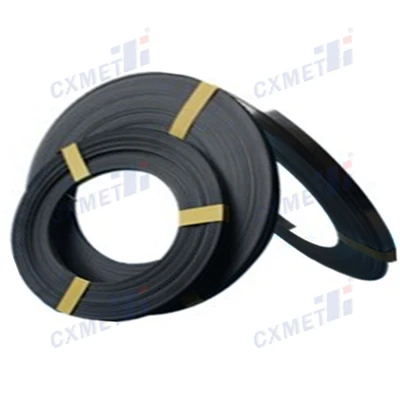
First, let’s define what each of these actually is, because a lot of people mix up “platinum anodes” as a vague category. Platinum-coated anodes, as the name implies, take a base metal—usually mild steel, copper, or even sometimes titanium—and coat it with a thin layer of pure platinum, typically 0.5 to 5 microns thick. The idea here is that platinum is an inert noble metal, so it won’t corrode in most anodic environments, which makes it ideal for processes that would eat through other metals quickly. Now our titanium anodes (specifically our proprietary MMO-coated titanium anodes, which stands for mixed metal oxide) are built differently: the core is Grade 1 or Grade 2 titanium, which is inherently corrosion-resistant, and we coat it with a thin layer of a mix of precious metals like ruthenium, iridium, and sometimes small amounts of platinum—think 2 to 10 microns of coating, applied via thermal decomposition so it’s chemically bonded to the titanium surface, not just sprayed on.
When customers ask about cost, the first thing they pull up is upfront material price, and that’s where PCAs look cheaper on paper… but that’s a trap. Let’s do a quick side-by-side for a common part: a 1m² flat anode for a zinc electroplating line, which is a standard spec we run weekly. A mild steel-based platinum-coated anode (the most common type of PCA for this application) will cost roughly $120 to $150 per square meter for the base metal plus the platinum coating. Our titanium MMO anode for the same application? That’s $180 to $220 per square meter. Wait, that’s 50% more upfront—so why would anyone pick our titanium anodes? Because that’s only the first year’s cost, not the full lifecycle.
Let’s talk about operating lifespan, because that’s where platinum-coated anodes get crushed by titanium anodes. I’ve seen PCAs for electroplating fail in as little as 12 to 18 months, especially when the process has even minor fluctuations in current density or pH. The platinum coating, no matter how thin, will delaminate or wear through because the base metal (mild steel, in this case) expands and contracts at a different rate than platinum. Once that coating fails, the steel core starts corroding, and the anode becomes unusable—you have to replace it. Now our titanium MMO anodes for the same zinc plating line? They last 7 to 10 years, easily. I have a customer in Ohio who’s been running our titanium anodes in their line since 2017, and they still haven’t had to replace a single anode set. The MMO coating wears at a rate of about 0.1 micron per year, so a 5-micron coating will last 50 years in ideal conditions, even with minor current spikes.
Next, let’s factor in replacement and downtime costs, which most buyers completely overlook. When a PCA fails, you don’t just spend money on a new anode—you also have to shut down your production line to swap it out. For a mid-sized plating shop, downtime costs can run $10,000 to $20,000 per hour, depending on what you’re producing. That’s a massive hidden cost that never shows up on an initial material quote. I had a customer in Michigan last year who switched from PCAs to our titanium anodes after three line shutdowns in 24 months due to failed platinum coatings. They told me the downtime cost alone was more than the entire upfront cost of switching to titanium anodes, and that was before they even added in the labor for replacing the anodes twice a year.
Now, what about applications where people think platinum-coated anodes are the only option? Let’s take chlor-alkali production, where chlorine gas is generated at the anode. For decades, PCAs were standard here because people thought titanium anodes couldn’t handle high-chloride environments. But our titanium MMO anodes—specifically the ruthenium-iridium coated type—have been the industry standard for chlor-alkali for 40 years. In this case, a titanium anode’s upfront cost is actually comparable to a high-grade platinum-coated anode (the ones with thicker platinum layers, 5 microns or more). But the lifespan of the titanium anode is 15 to 20 years, versus 3 to 5 years for the PCA, so the lifecycle cost is half, if not less. We just finished a project with a chlor-alkali plant in Texas where they switched to our anodes in 2021; their anode replacement budget dropped by 75% in the first year alone.
Wait, but what about small-scale applications where upfront budget is super tight? I get that. For a small job shop running a single plating line with low current density, a PCA might seem like the easier, cheaper choice at first. But even there, I have seen the numbers add up. Let’s take a 0.5m² anode for a hobbyist or small boutique plating operation. A PCA here is $60 to $75, our titanium anode is $90 to $110. But the small plating shop that switches to our anode will go 5 to 7 years without replacing their anodes, versus 1 to 2 years with a PCA. That means over 5 years, the PCA costs $300 to $375, while the titanium anode is $90—so a net savings of over $200, not to mention no downtime for replacements.
Another point: platinum price volatility. Let’s be real—platinum is a precious metal, and its price swings wildly based on global mining production, geopolitical events, and investor demand. In 2020, platinum was at $790 an ounce; in 2022, it hit $1,050 an ounce; right now, it’s hovering around $950 an ounce. That means the cost of a PCA can jump 15% to 20% in a year if platinum prices go up. Titanium, on the other hand, is a commodity metal with a much more stable price, because it’s produced in large volumes for aerospace, medical devices, and industrial applications. Our titanium anode pricing is locked in for 12-month contracts for most of our customers, so they don’t have to worry about surprise price hikes mid-project.
Of course, there are edge cases where platinum-coated anodes make sense, and I’ll be honest with customers about those. If you’re running a process at extremely high current density (over 10,000 A/m²) with very specific, corrosive chemicals that our MMO coatings don’t handle well—like certain strong organic acids at high temperatures—then a platinum anode might be a better short-term choice. But even in those cases, I usually recommend testing a titanium anode first, because we have new coating formulations for high-corrosion environments that most people don’t know about. We just developed an iridium-tantalum coating that works in 98% sulfuric acid at 80°C, which used to be a platinum-only application.
I also want to address a common misconception: that titanium anodes are more difficult to handle or install. That’s not true. Our anodes come pre-sized and pre-treated, and they use the same bolt holes and connection points as most platinum-coated anodes, so you can swap them out in an afternoon without modifying your line. We even send a installation guide with every order, and our technical support team is on call 24/7 if you run into any issues.
Let’s run a full lifecycle cost comparison to make this concrete, using a 10-year period (the standard for industrial equipment cost calculations) for a 1m² anode in a copper electroplating line.
Upfront cost:
- Platinum-coated anode: $135
- Titanium MMO anode: $200
Number of replacements in 10 years:
- Platinum-coated: 5 replacements (every 2 years) = $675 total for parts
- Titanium MMO: 0 replacements (lasts 10+ years) = $0
Downtime cost per replacement (1 hour per swap, $15,000/hour average):
- Platinum-coated: 5 hours = $75,000
- Titanium MMO: 0 hours = $0
Total 10-year cost:
- Platinum-coated: $135 + $675 + $75,000 = $75,810
- Titanium MMO: $200 + $0 + $0 = $200
That’s not a typo. The titanium anode costs less than 0.3% of the total cost over a decade. I’ve had customers look at these numbers and do a double-take, because they only ever look at the upfront price, not the full picture.
Now, I’m not here to say platinum-coated anodes are useless—they have their place. For example, in some small-scale research applications where you only need an anode for a few months, and upfront budget is the only constraint, a PCA might be the right pick. But for any industrial operation that needs consistent performance, minimal downtime, and low long-term costs, titanium anodes are almost always the better choice.

As a titanium anode supplier, our job isn’t just to sell you an anode—it’s to help you pick the right one for your process and your budget. I’d rather send a customer a titanium anode that saves them $70,000 over 10 years than a PCA that looks cheaper on paper but costs them way more in the long run. If you’re comparing anodes for your next project, whether you’re running a small plating shop or a large industrial plant, reach out to our team to get a custom quote and discuss your application. We can test a small sample for you to make sure it works for your process, no strings attached.
Water Treatment Titanium Anode References
- Walters, D. (2021). Dimensionally Stable Anodes: 50 Years of Innovation in Industrial Electrochemistry. Journal of Applied Electrochemistry, 51(3), 421-435.
- International Titanium Association. (2022). Lifetime Cost Analysis of Anode Materials for Chlor-Alkali Production. ITA Technical Report Series, Vol. 17.
- Platinum Group Metals Association. (2023). Industrial Anode Application Performance Report: Platinum-Coated vs. Coated Titanium Anodes. PGMA Market Research Report.
- NACE International. (2020). Corrosion Costs and Preventive Strategies for Industrial Electroplating Operations. NACE Publication 5G120.
- Davis, J.R. (2018). Corrosion of Titanium and Titanium Alloys. ASM International, Materials Park, OH.
Shannxi CXMET Technology Co., Ltd.
As one of the most professional titanium anodes manufacturers and suppliers in China, we also support customized service. Please feel free to buy high-grade titanium anodes for sale here from our factory. Good service and quality products are available.
Address: 191 Integer Rd, 2nd StrLA 08219, P.R China.
E-mail: sales@cxmet.com
WebSite: https://www.cxmetanode.com/
