As a razor wire supplier who’s been working in the physical security space for over a decade, I’ve talked to hundreds of property managers, architects, and business owners who tell me the same thing: they know they need perimeter security, but they’re stuck on how to balance safety with their property’s aesthetic. For years, the assumption was that razor wire was an eyesore—something to hide behind walls or tuck away where no one could see it. But after seeing how so many properties struggle with that tradeoff, I’ve come to realize that the relationship between razor wire and a property’s aesthetic is way more nuanced than most people think. It’s not just “good or bad”; it’s about context, installation, and what you prioritize when you’re designing a space. Razor Wire
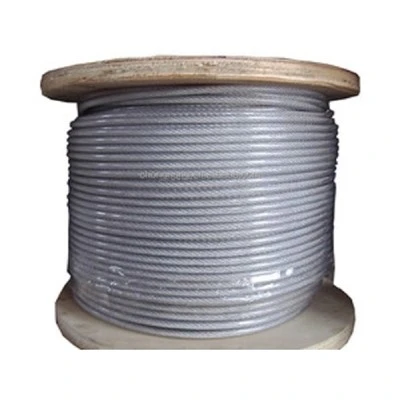
Let’s start with the basics: why do people even consider razor wire in the first place? Unlike chain-link fences that can be climbed through or cut with basic tools, razor wire adds a physical and psychological barrier that’s proven to deter trespassers, theft, and unauthorized access. For commercial properties—warehouses, manufacturing facilities, data centers—the cost of a break-in can run into tens of thousands of dollars, including lost inventory, repairs, and downtime. For residential properties, especially those in high-crime areas, it’s often the difference between feeling safe and living with constant anxiety. But that security comes with a tradeoff, and that’s where the aesthetic conversation starts.
I recently worked with a small manufacturing company in rural Ohio. Their facility was tucked between a busy highway and a residential neighborhood, and they’d tried chain-link fencing a few years back, but it was constantly being climbed by local teens who’d hang out on their property after school. The chain-link made the area look run-down, and neighbors had complained about the litter and vandalism that came with it. When they installed razor wire along their perimeter, I expected them to get pushback from the neighborhood, but instead, the feedback was mostly positive. Why? They mounted the razor wire on top of a solid concrete wall that already ran along the property line, so from the street, all you saw was a neat, low wall, not the sharp coils of the wire. It was a subtle addition that didn’t clash with the rural, residential feel of the area, and within a few months, the teen trespassing stopped. That’s a perfect example of how installation can change everything: the same razor wire that would look out of place on a decorative iron fence can blend in when paired with the right base structure.
Of course, not all properties have the luxury of a concrete wall. Many commercial spaces use chain-link as a base, which is where the “eyesore” reputation comes from. When razor wire is added to the top of an unadorned chain-link fence, the coils create a harsh, jumbled line that sticks out against landscaping, buildings, or sky. I’ve had clients tell me their property looked like a prison when they installed it that way, and they’re right—mass-coiled razor wire on thin chain-link can read as punitive, which does more than just hurt curb appeal: it can also affect how customers or tenants perceive the space. A retail park with a perimeter that looks aggressive might make shoppers feel unwelcome, or office tenants might question the safety of a building that feels like a fortress.
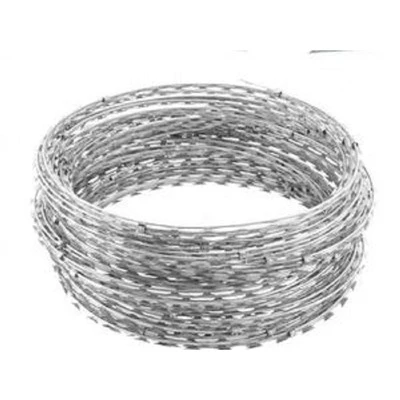
That’s why in recent years, we’ve worked to develop razor wire options that address that aesthetic gap. Concertina razor wire, for example, comes in tighter, more uniform coils than traditional barbed wire, so when it’s installed properly, it doesn’t look messy. We also offer coated razor wire, available in black, green, and brown, so it can match the color of chain-link or fencing. One of our clients, a residential gated community in Florida, used green-coated razor wire on top of their perimeter fences, and from the golf course that borders the community, it blended so well that most visitors didn’t even notice it—until a stray raccoon tried to climb the fence and was deterred. That’s the sweet spot: security that works without undermining the space’s intended look.
Another factor that often gets overlooked is the type of property and its purpose. Institutional properties, like correctional facilities, military bases, or high-secure research labs, don’t have to prioritize aesthetic appeal the same way a boutique hotel or a university campus does. For those spaces, razor wire is a necessary security measure, and its industrial look is often aligned with the functional, secure nature of the building. But even on those properties, we’ve had clients adjust their installation to soften the look. For example, a university research lab in Arizona installed tall, landscaping-friendly hedges along the base of their fence, with razor wire hidden a few feet above, so when you’re walking near the building, you don’t see the sharp wire—you just see a green border.
The flip side is residential properties, where aesthetic is often tied to property value. A lot of homeowners avoid razor wire because they worry it will lower their home’s value, but that’s only true if it’s installed incorrectly. I worked with a homeowner in Denver who had their backyard broken into twice in six months. They had a wooden fence that was easy to climb, and they were debating whether to replace the whole fence or add razor wire. Instead of replacing the fence, we recommended installing flat razor wire panels along the top of the fence, oriented so the sharp edges faced inward toward the yard, not outward toward the street. From the sidewalk, you couldn’t tell there was razor wire there at all, but it stopped intruders from climbing over. When they sold their home a year later, their realtor said the security feature was a selling point, not a turnoff. That’s a small change that makes a big difference: orientation and visibility are everything.
It’s also important to talk about the psychological impact of perimeter design. A 2021 study by the International Association of Chiefs of Police found that well-designed, unobtrusive security barriers reduce trespassing rates just as effectively as overt, aggressive-looking barriers. That’s not to say razor wire is useless, but when it’s hidden or integrated into the design rather than forced onto it, it works better for both security and aesthetic. On the other hand, a fence with razor wire stretched across the top, visible from every angle, can create a sense of distrust or hostility, even if it’s there for safety. That’s why we always advise clients to assess two things first: what’s the primary purpose of the security, and how visible does that security need to be? If you’re in a high-theft area, a small amount of visible razor wire might be a good deterrent, but if you’re in a residential neighborhood, hiding it can protect both your property’s safety and your relationship with neighbors.
I’ve seen too many people approach razor wire as a one-size-fits-all solution, but the reality is that it’s a tool, not a design decision. It can be a complement to a property’s aesthetic when installed thoughtfully, or a liability when it’s added as an afterthought. The best approach, in my experience, is to work with a supplier who doesn’t just sell product, but helps you figure out how to integrate it into your space. For example, when I meet with a new client, I first ask them to show me their property: what’s the fence made of? Is there existing landscaping? What’s the area around the perimeter like? Then I can recommend the right type of razor wire, the right installation method, and even the right coating to make it work for their specific needs.
At the end of the day, a property’s aesthetic is about how it feels to be there, and security is about how safe you feel there. Razor wire doesn’t have to force you to choose between the two. If you’re a property manager, architect, or homeowner looking to add perimeter security without sacrificing your property’s look, we can help you find the right solution. Reach out to our team to discuss your needs, and we’ll work with you to balance safety, function, and aesthetic for your space.
Security Wire References
- International Association of Chiefs of Police. (2021). Perimeter Security Best Practices for Residential and Commercial Properties.
- National Institute of Justice. (2019). The Effectiveness of Razor Wire Deterrence for Perimeter Security.
- American Society of Landscape Architects. (2020). Integrating Security Barriers into Landscape Design.
- Property Damage Research Institute. (2022). The Impact of Perimeter Security on Commercial Property Values.
Firmstone (Tianjin) International Limited
Firmstone (Tianjin) International Limited is one of the most professional razor wire manufacturers and suppliers in China, featured by quality products and good service. Please feel free to buy bulk advanced razor wire made in China here from our factory. Welcome to contact us for quotation.
Address: 411, Prophet Valley, No.10, Meiyuan Road, Huayuan Industrial District, Xiqing District, Tianjin
E-mail: sales1@firmstone-wire.com
WebSite: https://www.firmstonefactory.com/
