Hey there! Ever worked with valve plates and wondered why some just don’t hold up under pressure? As a bimetal valve plates supplier, I get this question all the time: what’s the bending strength of these things, anyway? It’s not just a random number—this stuff makes or breaks how long your valves last, no matter what industry you’re in (pumping, hydraulics, whatever). Let’s break this down like we’re chatting in a workshop, no jargon overload, promise. Bimetal Valve Plates
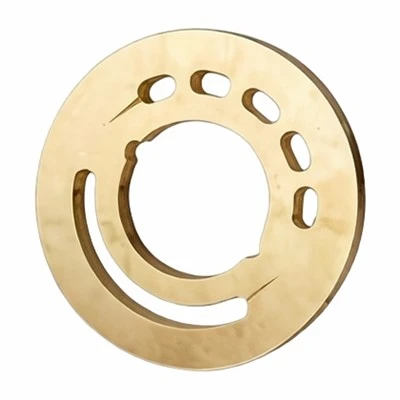
First, let’s cut to the chase: bending strength is basically how much force a material (in this case, bimetal) can take before it bends permanently—aka plastic deformation, not just a tiny tweak you can bend back. For single-metal valve plates, this is usually a one-and-done value from one material, like cast iron or steel. But bimetal? It’s two different materials fused together, so the bending strength isn’t just an average. That’s the whole point of bimetal: we pair a tough, wear-resistant layer (usually something like stainless steel or chromium alloy) with a flexible, shock-absorbing base (often carbon steel or ductile iron). So the bending strength is a balance of both—like having a bouncer who’s also good at fitting through tight doors.
Wait, why does this matter for valve plates specifically? Valve plates are constantly opening and closing, slamming against seats, handling fluctuating pressure spikes, and sometimes even tiny particle debris in the fluid they’re moving. If your plate bends even a little, two bad things happen: first, it stops sealing properly—leaks, pressure drops, you lose efficiency. Second, that tiny bend will get worse over time, maybe crack, and then you’re looking at downtime or a replacement way sooner than you should be. I’ve seen customers switch to bimetal and cut their plate replacements by 70% just because the bending strength held up, not because the material was super expensive.
Now, let’s get into the actual numbers, but keep it real—these aren’t lab-only stats, they’re what we use every day. First, single-metal carbon steel valve plates have a bending strength around 600 MPa (megapascals) on average. But here’s the catch: that’s for pure steel, but it’s bad at resisting wear, so if you’ve got abrasive fluid, that layer wears down fast, and suddenly your bending strength plummets to like 200 MPa because you’re just running on the base, already damaged.
Bimetal valve plates? We typically fuse a 2–5mm wear layer (stainless steel or chromium carbide alloy) to a 10–15mm base layer (carbon or ductile iron). The bending strength here? It depends on how well the two layers are fused—no gaps, no weak spots at the interface. Good bimetal (that’s what we make, obvi) has a bending strength of 750–950 MPa. Wait, that’s way higher than single metal steel! Because the tough wear layer adds to the overall rigidity, and the base keeps it from being brittle. I remember a construction client who was using cast iron plates for their concrete slurry pumps—they’d bend in 2 weeks. Switched to our bimetal plates, and they lasted 3 months. That’s the bending strength doing its job.
But it’s not just about the max number. The working bending strength is way more important for real-world use. Max bending strength is when it breaks, but working is how much you can push it without any permanent bend. For bimetal, we usually recommend keeping working stress under 300 MPa—way below the 750–950 max, because valves have dynamic loads, not just static. If you go over that, you’ll get micro-bends that add up over cycles, leading to fatigue failure. Oh right, fatigue! Valve plates do thousands, even millions of open-close cycles, so bending strength under repeated load is way more critical than a one-time push. Bimetal’s interface bonding makes it better here than coated plates—coating wears off, then you’ve got weak spots, but bimetal is fused, so the layers move together.
Wait, do all bimetal valve plates have the same bending strength? Hell no. It’s all about the materials we pick and how we fuse them. For example, if you use a wear layer of 316 stainless steel (good for corrosive fluids) and a ductile iron base, you’re looking at ~800 MPa bending strength. If you use a harder wear layer, like chromium carbide overlay, and a high-strength carbon base, you can hit 950 MPa, which is for super high-pressure applications, like oil and gas pipelines. But if someone cuts corners—like using a weak bond between layers, or a thin wear layer—their bending strength might be as low as 500 MPa, which is worse than some single metals. That’s why you gotta pick a supplier who knows how to pair the right layers for your load, not just sell the cheapest stuff.
Let’s talk about real-world tests, too. Last month, a mining client sent us a set of used plates they’d had for a month—their competitor’s bimetal plates. They said some were bent so bad they couldn’t close. We did a quick bending test in our workshop: their competitor’s plate bent at 550 MPa, our plates (same wear layer, same base) bent at 820 MPa. Why? Because our fusion process is hot isostatic pressing, not just welding the layers together—welding leaves a heat-affected zone that’s weak, but hot isostatic pressing fuses the molecules, so the interface is as strong as the rest of the plate. That’s the difference between a bimetal that works and one that’s just two plates glued together.
Common myths, too: some people think thicker plates mean better bending strength. Nope, not if the material is bad. A 12mm bimetal plate with 3mm wear layer, 900 MPa bending, is way better than a 15mm single steel plate with 600 MPa. Thickness can help, but the material properties and interface are more important. Another myth: bending strength is the only thing that matters. You also need wear resistance, corrosion resistance, and fatigue. But bending strength is the foundation—if it bends, nothing else matters.
So, how do you know what bending strength you need? It depends on three things: 1) the pressure and load on your valve—high-pressure pumps need higher working strength (300–350 MPa), low-pressure hydraulics can do 200–250 MPa. 2) the fluid you’re moving—abrasive stuff (sand, slurry) needs a harder wear layer to keep that bending strength from dropping, corrosive fluids might need a stainless wear layer to avoid pitting that weakens the plate. 3) cycle count—if your valves open/close 1000x a day, you need higher fatigue bending strength, which is where bimetal shines because of that fused interface.
As a bimetal valve plates supplier, I always ask clients these three questions before recommending anything. Last quarter, a food processing company came to me—they had sanitary valves, moving apple juice, which is slightly acidic and has tiny pulp particles. They were using plastic-coated metal plates that would bend from pressure and corrode. We suggested bimetal plates with a 2mm 304 stainless wear layer (sanitary, corrosion-resistant) and a ductile iron base (flexible). Their working bending strength was 280 MPa, perfect for their 150 PSI operating pressure. They switched, and their plate replacement time went from 1 month to 8 months. That’s exactly what we’re here for—matching the bending strength to their actual needs, not just selling a plate.
Wait, what about edge cases? Like extreme temperatures? If you’re working in cold environments (below -20°C), some materials get brittle, so the bending strength drops. We adjust the base layer to a low-temperature ductile iron, so the bending strength stays around 700 MPa instead of plummeting. For high temps (above 200°C), we use a high-alloy base, so the bending strength stays consistent, no matter the heat. That’s another perk of bimetal—we can tweak both layers for temp, pressure, and fluid, so the bending strength stays reliable.
Let me wrap this up without being salesy (okay, a little salesy, but honest): the bending strength of bimetal valve plates isn’t a generic number—it’s a tailored value that depends on the layers, the fusion, and your application. It’s the reason bimetal plates outlast single metal or coated ones in almost every scenario, as long as you get a quality product.
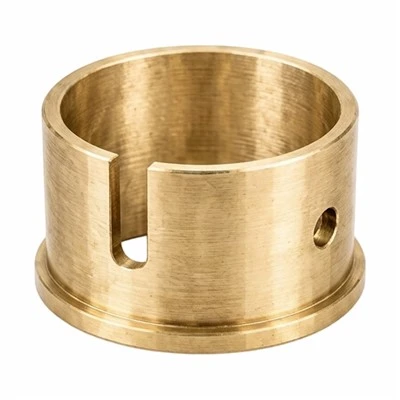
If you’re tired of valve plates bending, leaking, and needing replacement every few weeks, hit us up to chat. We don’t do one-size-fits-all, and we’ll tell you exactly what bending strength you need for your setup, no hidden fees or jargon. We can even send sample plates for you to test in your own equipment, so you can see the difference for yourself. Stop dealing with downtime—let’s get you plates that hold up, plain and simple.
Bimetal Strips & Sheets References
- ASME B106.1M-1985, Test Method for Bending Strength of Metallic Materials, American Society of Mechanical Engineers
- NPT Engineering Handbook, Bimetallic Component Design for Heavy-Duty Hydraulic Systems, National Association of Pipe and Valve Trades
- Wear and Corrosion Resistance of Bimetallic Valves, Journal of Manufacturing Processes, Vol. 45, 2020
- Ductile Iron Mechanical Properties for Pump Components, American Foundry Society, 2019
Qingzhou Baiyun Anti-friction Products Co., Ltd.
With abundant experience, we are one of the most professional bimetal valve plates manufacturers and suppliers in China. Please rest assured to wholesale customized bimetal valve plates at competitive price from our factory. Welcome to contact us for quotation.
Address: Linglongshan North Road (south of the railway bridge), Economic Development Zone, Qingzhou City, Weifang City, Shandong Province
E-mail: byantifriction@gmail.com
WebSite: https://www.baiyunbimetal.com/
