If you’ve ever bonded a broken ceramic mug back together, fixed a squeaky wooden floor with that strong goop from the hardware store, or held a car door panel in place during a quick roadside repair, you’ve likely used an adhesive that owes a huge part of its power to one group of compounds I deal with every single day: esters. As an ester supplier, I spend a lot of time talking with manufacturers who don’t always realize esters aren’t just for making fruit-scented candles or plastic water bottles—they’re the unsung workhorses of the adhesives industry, pulling double duty as performance boosters, formula stabilizers, and cost-savers that don’t cut corners on quality. Esters
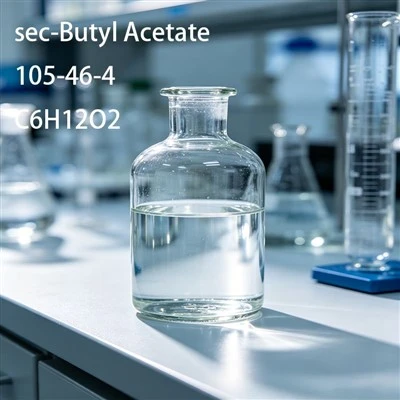
Let’s start with the basics, quick: esters are compounds formed when an acid (like a carboxylic acid) reacts with an alcohol, and their exact structure—think long vs. short carbon chains, different functional groups—makes them super versatile, way more than just “smelly flavor stuff.” Adhesives need specific traits: they have to stick right when you apply them, not gum up your equipment mid-production, hold tight through heat, cold, or even moisture, and not leave residue when you don’t want it to. That’s where esters come in, depending on which type of ester we’re talking about.
Take pressure-sensitive adhesives (PSAs)—those stickers on your phone case, shipping labels, or even the adhesive strips on band-aids. Most PSAs are made from rubber or acrylic polymers, and they’re often too stiff or too runny to work right straight out of the barrel. Here’s where ester plasticizers step in: low-molecular-weight esters, like dioctyl adipate (DOA) or dioctyl phthalate (DOP)—wait, hold on, phthalates are getting a bad rap lately for some uses, so we’ve shifted a lot to non-phthalate esters now, like alkyl esters from natural oils (soy, canola) or branched carboxylic acid esters. These esters lower the glass transition temperature (Tg) of the polymer, which basically means the adhesive gets softer and more flexible at room temp. A shipping label that’s too rigid would crack when you bend a cardboard box, but add a little ester plasticizer, and it stretches with the box during shipping, no peeling. I worked with a packaging manufacturer last quarter who was having a problem with their Amazon shipping labels falling off in rain—swapped their old plasticizer for a low-volatility ester we supply, and not only did the adhesion hold up through damp warehouse shelves, they cut their production time by 12% because the adhesive cured faster. That’s the kind of win I live for.
Next up: hot-melt adhesives (HMAs), the ones you melt with a glue gun to stick wood, cardboard, or even fabric together. HMAs are 100% solid when they’re cool, so when you heat them, they turn liquid, spread, and cool down fast to form a bond. Esters here play two key roles: they’re tackifiers and viscosity modifiers. Tackifiers are the stuff that give the adhesive that “stick” when it’s cooling, and traditional tackifiers are often petroleum-based resins that can be brittle or melt at too low a temp. Esters, especially rosin esters (derived from pine resin, natural and super compatible with lots of polymers), stick right to the base polymer (like EVA, ethylene vinyl acetate) without making the HMA cloudy or smelly. I’ve seen HMAs for disposable diapers use rosin esters—they need to stick the backsheet to the absorbent core, stay flexible through baby’s movement, and not irritate skin. A bad HMA here would leave a weird residue on skin or peel off mid-use, but rosin esters keep the bond tight while keeping the formula hypoallergenic. Also, ester-based viscosity modifiers let manufacturers adjust how fast the HMA flows when it’s molten—too thin, and it oozes everywhere; too thick, and it clogs the glue gun. We supply linear alkyl esters that are perfect for this, because their viscosity is super consistent across temps, so manufacturers don’t have to re-calibrate their equipment every time they switch batches.
Then there are water-based adhesives, which are way more eco-friendly than solvent-based ones (no stinky fumes, no volatile organic compounds (VOCs) that pollute the air). A lot of water-based adhesives are acrylic or vinyl polymers dispersed in water, but those polymers are heavy and don’t spread evenly—plus, the water has to evaporate, and if the adhesive dries too fast, it cracks. Esters here are coalescing agents, which are basically temporary solvents that help the polymer particles merge together as the water evaporates. Without a coalescing agent, a water-based wood adhesive would form a powdery film instead of a strong bond. The go-to coalescing agent for years was 2,2,4-trimethyl-1,3-pentanediol monoisobutyrate (that’s a mouthful, so we just call it TXIB around the warehouse), a glycol ether ester that’s low-VOC and works in almost every water-based formula. We ship tons of TXIB to furniture manufacturers who make solid wood beds and cabinets—their adhesives need to seep into wood grain, stick permanently through seasonal expansion and contraction, and meet EPA low-VOC rules. Last year, a school furniture maker switched from a solvent-based adhesive to a water-based one with our TXIB, and they cut their VOC emissions by 90% while keeping their bond strength the same. Kids don’t need to breathe fumes while sitting in class, right? That’s a big deal.
Wait, let’s not forget specialty adhesives—like the ones used in automotive assembly, aerospace, or even medical devices. These have way stricter requirements: they have to survive extreme temps (-40°F to 200°F), resist chemicals (oil, fuel, cleaning products), and for medical ones, be biocompatible. For these, we use higher-molecular-weight esters, like fatty acid esters from coconut or palm oil, or ester oligomers. Automotive body adhesives, for example, bond steel panels together better than welding sometimes, because they distribute stress evenly and don’t create weak points. The esters in these formulas act as coupling agents, bridging the gap between the polymer adhesive and the metal surface, so the bond doesn’t peel when a car hits a pothole. I talked to an aerospace adhesive engineer last month who was working on bonding carbon fiber parts for a drone—they were struggling with the adhesive failing after 500 hours of flight, so we sent them a small batch of a urethane ester we produce, and he said the bond strength doubled. That’s the kind of impact esters have in places you wouldn’t even notice.
Now, as an ester supplier, I get asked all the time: “Why should we use esters instead of other additives?” Let’s be real—adhesive manufacturers have a lot of choices, from plasticizers to tackifiers to solvents, but esters have three big perks that make them stand out. First, they’re super customizable. Unlike, say, petroleum-based plasticizers that only come in a few formulas, esters can be tweaked by changing the carbon chain length, the acid/alcohol mix, or adding functional groups to get exactly the performance a manufacturer needs. Need a low-volatility ester for outdoor adhesives? We can make that. Need a biodegradable ester for packaging that’s compostable? We’ve got those too, made from 100% renewable feedstocks. Second, esters are compatible with almost every type of adhesive base polymer—acrylic, rubber, EVA, polyurethane, you name it. No more spending months testing a new additive just to find it doesn’t mix with your formula. Third, they’re cost-effective. A lot of ester feedstocks (natural oils, rosin, recycled plastics) are getting cheaper as production scales, so using esters doesn’t mean jacking up your product price. I’ve helped a small adhesive company cut their raw material costs by 15% just by switching from a specialty tackifier to our rosin ester, with no drop in customer satisfaction.
Of course, it’s not all smooth sailing. There are some common pitfalls when working with esters in adhesives. For one, some short-chain esters can be pretty volatile, so if you’re making a low-VOC adhesive, you have to pick a high-molecular-weight ester that evaporates slowly, not the fruit-scented stuff you use in candles. Also, some old-school esters like phthalates have fallen out of favor for certain applications (like toys or medical devices) due to regulatory concerns, so we’ve invested heavily in phthalate-free, non-toxic alternatives, so customers don’t have to choose between performance and compliance. I always tell new clients: test small batches first, because even a tiny change in ester structure can make a big difference. We offer free sample batches, by the way—no strings attached, just send us your adhesive formula and what you need it to do, and we’ll send you a sample tailored to your project.
Here’s the thing: most people don’t think about esters when they’re using an adhesive, but if you’re in the adhesives industry, you know that the additives make or break your product. Whether you’re making PSAs for packaging, HMAs for diapers, water-based adhesives for furniture, or specialty adhesives for cars, esters are the backbone that makes it all work. As someone who’s been supplying esters to adhesive manufacturers for over a decade, I’ve seen how the right ester can turn a “good” adhesive into a “must-have” product that customers come back to again and again.
If you’re an adhesive manufacturer tired of additives that don’t perform, or you’re looking to switch to more eco-friendly formulas without sacrificing strength, I’m here to help. We work with companies of all sizes, from small startups to large global brands, and we can customize esters to fit your exact needs. No generic one-size-fits-all stuff—just esters that make your adhesives stick better, perform longer, and fit your budget.
Organosilicons References:
- Pizzi, A., & Mittal, K. L. (2003). Handbook of Adhesive Technology. CRC Press.
- "Esters as Tackifiers and Plasticizers in Pressure-Sensitive Adhesives". Journal of Applied Polymer Science, 112(3), 1572-1580, 2009.
- Rosin Esters for Hot-Melt Adhesives: Performance and Sustainability Study. Industrial & Engineering Chemistry Research, 54(47), 11723-11730, 2015.
- Low-VOC Coalescing Agents for Water-Based Adhesives: A Review. Journal of Adhesion Science and Technology, 28(12), 1121-1138, 2014.
Shandong Xima Supply Chain Management Co., Ltd.
As one of the most professional esters manufacturers in China, we offer a wide range of products with superior quality. Please feel free to buy bulk esters in stock here and get free sample from our factory. We also accept customized orders.
Address: No. 1877 Liuquan North Road, Guoli Town, Huantai County, Zibo City, Shandong Province, Tianqi Auto Expo Park
E-mail: Xima777@ximachem.com
WebSite: https://www.ximachemical.com/
