Hey there, folks! If you’ve been hanging around the stone fabrication space for a while, you’ve probably stumbled across serpentine at some point—those smooth, swirl-patterned stones that look like they’ve got little galaxies trapped inside, right? I’m a stone cutting machine supplier, so I get tons of questions every week, and one of the most common ones I hear is: “Can a stone cutting machine actually cut serpentine without messing it up?” Stone Cutting Machine
First off, let’s cut through the confusion straight away: Yes, stone cutting machines can absolutely cut serpentine—if you’re using the right machine, and you know what you’re doing with the material. A lot of the misinformation out there comes from people lumping all “natural stone” into the same bucket, and that’s where things go sideways. Serpentine’s not granite, it’s not marble, it’s its own thing with unique properties that change how you approach cutting it. Let’s break this down, no jargon, no fluff, just what matters if you’re working with serpentine.
First, let’s talk about what serpentine actually is, because that’s half the battle. It’s a metamorphic rock (wait, no—technically, it’s a mineral aggregate, but most folks call it a rock) made mostly of serpentine group minerals, right? The key thing here is its hardness. Mohs scale is the go-to for mineral hardness, and granite clocks in around 6-7, marble is 3-4… serpentine? It’s 2.5 to 5. Wait, that’s a huge range! Some serpentine varieties are softer than your fingernail (which is ~2.5), others are as hard as copper (which is ~3.5), and even some dense, fine-grained serpentine hits 5, almost as hard as glass. That range is why so many people get tripped up—if you grab a machine meant for granite, you might overwork the soft serpentine and cause chipping, or if you use a marble cutter on the dense stuff, it’ll take forever to cut and wear through blades way too fast.
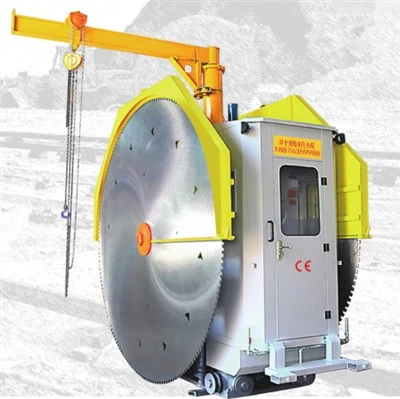
So what kind of stone cutting machine works best here? Let’s be real, we’re not talking about some tiny portable tile saw you picked up at the hardware store for a weekend DIY project. Those things are great for small tiles, but serpentine (especially if you’re cutting slabs for countertops or large sculptures) needs a machine with enough power and precision. For most commercial or shop use, a bridge saw is your bread and butter here. Bridge saws have that big rotating blade, can handle large slabs, and you can adjust blade speed depending on the serpentine’s hardness. For the super soft stuff, you want a lower blade speed (around 1,500-2,000 RPM) with a soft-bond diamond blade—soft bond means the diamond grit wears away faster, so it doesn’t get clogged up with the serpentine’s softer material. For the denser serpentine, you bump the speed up to 2,500-3,000 RPM and go with a medium bond blade. That makes total sense, right? Harder material needs a bond that lasts longer, so you don’t have to change blades every 10 feet of cut.
Wait, but what about handheld machines? Can you use a handheld angle grinder with a diamond blade for small cuts, like for trim pieces? Yeah, but it’s tricky. Serpentine has a weird quirk—when it’s cut too fast or with too much pressure, it can get what’s called “heat cracking” or even discolor. Serpentine’s got a lot of water and magnesium inside, right? If you’re grinding it dry (no water cooling), the friction from the blade can heat up that material, make the water evaporate too fast, and cause tiny cracks you can’t see at first, but later when the piece is installed, it splits. That’s a nightmare for anyone who’s ever had a countertop crack out of nowhere, so cooling is non-negotiable here. If you’re using a handheld machine, always use water cooling. It cuts down on heat, keeps the blade sharp, and prevents that discoloration that makes serpentine lose its pretty swirls.
I’ve seen way too many horror stories from new fabricators who skipped the cooling step. One guy last year tried cutting a big serpentine slab with a dry handheld saw, spent three hours on it, and when he wiped off the dust, the entire slab had these grayish, burnt patches where the blade had been. He lost $1,200 worth of material, and had to re-cut the whole thing with a bridge saw and water. Don’t be that guy.
Another thing about serpentine: it’s way more brittle than granite. Wait, hold on—earlier I said hardness ranges, but brittleness is different. Soft serpentine is actually pretty tough, but the dense, fine-grained kind? It’s brittle, like a piece of old chalk but fancier. So when you’re making cuts, you can’t just rush the feed rate. Feed rate is how fast you move the material (or the saw blade) through the cut. For granite, you can push it pretty hard to get through fast. For serpentine, especially the brittle dense stuff, you want a slow, steady feed. If you push too hard, the blade can catch, and the slab will chip or crack along the cut line. I tell our customers all the time: take your time with serpentine. It’s not a race. A slow, smooth cut is way better than a fast, botched one.
Now, let’s talk about the myths. Some people swear serpentine is impossible to cut without special equipment, and others say you can cut it with a regular tile saw. Both are wrong. If you use a regular tile saw (which is made for ceramic or porcelain, usually), the blade is too soft or the motor is underpowered. You’ll end up with a lousy cut, and the blade will be ruined in no time. On the flip side, you don’t need a $100k industrial saw to cut serpentine. A good mid-range bridge saw, paired with the right blade and a little know-how, works perfectly for most needs. We’ve got a lot of small fabricators who started with a used bridge saw, figured out the speed and blade combo for their local serpentine, and now they’re doing custom countertops that sell for way more than granite because serpentine is that unique.
Wait, another thing: maintenance for your machine when cutting serpentine. Because serpentine has that soft, sometimes dusty material, it can get into the blade’s gaps, on the saw’s rails, or even in the water tank. You’ve got to clean your machine after every job if you’re cutting serpentine a lot. If you let that serpentine dust build up, it can scratch the surface of future cuts, or get stuck in the blade and make it wobble, leading to uneven cuts. I’ve had customers call us saying their saw is acting weird, and half the time it’s just because they didn’t clean out the serpentine dust after the last project. It’s a tiny step, but it makes a huge difference in how long your machine lasts and how clean your cuts are.
Let’s circle back to the original question, just to make sure we’re clear. Can a stone cutting machine cut serpentine? 100% yes, but it depends on three things: 1) your machine’s power and adjustability (bridge saws are best, handhelds work for small cuts with cooling), 2) matching the blade and speed to your serpentine’s hardness, and 3) taking it slow with feed rate and cooling to avoid cracking or discoloration. If you skip any of those, you’re going to have a bad time.
Now, I know what you’re thinking—you’ve got a project coming up, maybe a serpentine countertop for a kitchen, or a custom sculpture, and you don’t want to waste material or time on the wrong machine. If you’re in the market for a stone cutting machine, or you’re not sure if your current setup is right for serpentine, don’t hesitate to reach out. We’re not just here to sell you a machine—we help folks figure out exactly what they need, whether that’s a mid-range bridge saw for their shop, or tips on using their existing handheld saw for small serpentine pieces. We’ve been working with fabricators for years, so we know the ins and outs of working with all kinds of stone, including that gorgeous serpentine.
Before I wrap up, let’s get real for a second. Serpentine isn’t the easiest stone to work with, but it’s also one of the most rewarding. Those swirls and patterns? You can’t get that with granite or marble. It’s a stone that makes any project feel unique, like it’s one of a kind. But that beauty comes with a few quirks, and cutting it right is all about matching the machine to the material.
If you’ve had a run-in with serpentine cutting—good or bad, or if you’ve got questions about your machine, blades, or process—hit us up. We’re here to help, no sales pressure, just straight talk from folks who know stone cutting machines. Don’t let the confusion around serpentine stop you from working with this amazing material.
Mining Machine References:
- Geological Survey, "Serpentine: A Common but Misunderstood Rock", 2022
- Stone Fabrication Association, "Best Practices for Cutting Soft and Brittle Natural Stones", 2021
- Diamond Tool Industry Association, "Blade Selection for Natural Stone Materials", 2023
Nanan Yeteng Machinery Co., Ltd.
With abundant experience, we are one of the most professional stone cutting machine manufacturers and suppliers in China. Please feel free to wholesale durable stone cutting machine in stock here from our factory. All customized machines are with high quality and competitive price.
Address: Nan’An Ye Teng Machinery Co Ltd(No,Dk24-F, Hailian Hi Tech Business Incubator, Shuitou Town, Nanan City Fujian China)
E-mail: 17758730131@163.com
WebSite: https://www.yetengmachine.com/
