If you’ve ever worked in a cleanroom—say, for semiconductor manufacturing, pharmaceutical packaging, or even biotech lab testing—you know how important every little detail is. One of the most underrated workhorses keeping those spaces free of stray particles (the kind that can ruin a $10k microchip batch or make a vaccine bad) is the air shower. If you’re sourcing these units, you’ve probably thought: “Does this thing actually work consistently?” Specifically, air-flow stability. Let’s break this down like I would if I was chatting with you over a coffee about the gear we supply, no stuffy jargon, just real-world stuff that matters. Air Shower
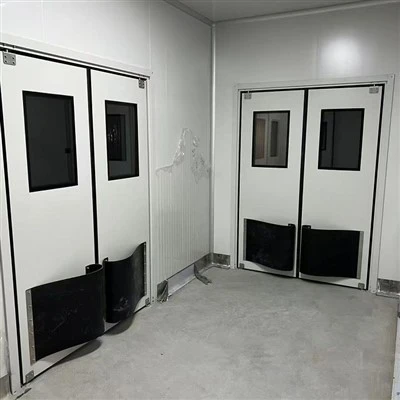
First, let’s get what an air shower does, plain and simple. It’s that enclosed tunnel right before you step into a cleanroom—you walk in, a few high-velocity jets blow a barrage of filtered air all over your clothes, shoes, hair, backpack, to knock off any loose particles that might tag along. The whole point of stability here is: does that air hit you the same way, every single time you use it? No weak spots where half your jacket is untouched, no random gusts that feel like a tiny hurricane, no times when the flow drops right before a big manufacturing run. That’s the baseline for stability, but it’s way deeper than “does the fan turn on.”
Let’s talk about the stuff that makes or breaks this for real. First, nozzle design. Old air showers (the kind you might see in a 90s lab) have those random nozzles poking out of the walls, pointed every which way. Those almost never have stable flow—one side of the tunnel might have 90 ft/min of air, the other only 50, because the nozzles are uneven, clogged, or angled wrong. The good ones we supply use uniform, slot-style nozzles or precisely drilled round nozzles, all spaced evenly, same angle, same hole diameter. We test every unit before it leaves our warehouse: we stick an anemometer (that’s the thing that measures air speed) at 10 different spots across the tunnel, and every single one has to be within ±5% of our target, no exceptions. If a nozzle’s even a 1mm off from where it should be, that flow’s off, and we fix it before it ships. Clogged filters are another big one. If the HEPA filter’s full of dust after 6 months, the air flow drops. Our units have a pressure gauge that blinks red way before that happens—we set it to alert when the filter’s 80% loaded, so you replace it before flow gets shaky. A lot of cheaper units skip the real-time monitoring, so you’ll notice the flow dropped after you already had a particle contamination issue. Oops.
Then there’s the motor and fan setup. Cheap air showers use a single off-the-shelf fan that’s not matched to the size of the tunnel. If you have a 6ft long tunnel, a tiny fan can’t push consistent air all the way to the back end, right? Our air showers use variable speed motors that adjust automatically to maintain that stable velocity, even as filters get a little dirty over time. We’ve had clients tell us their old units would feel strong when new, then after a few months, the front of the tunnel felt weak, and they’d have to crank the fan up. Our motor does that for you, so you don’t have to fiddle with settings, and the flow stays steady for 3+ years (we test that in our lab, running the fan 24/7 for 1000 hours straight and tracking flow change—less than 3%, which is way under industry standards).
Wait, let’s get into why this actually matters for your work, not just some engineering test number. If the air flow is unstable, two bad things happen. First, you miss particles. A weak spot in the tunnel means, say, the hem of your jeans has a particle that never gets blown off, and that particle walks straight into the cleanroom. For pharma, that means a batch of pills gets rejected, costing you thousands in materials and downtime. For semiconductor, that particle can make an entire wafer useless—each wafer is hundreds of microchips, so one tiny particle ruins thousands of dollars’ worth. Second, unstable flow makes the air shower annoying to use, and people skip it. If half your hair gets hit with air and half doesn’t, you’re gonna rush through the exit, cut the shower short. We’ve had clients who switched to our units because their old ones were so inconsistent, employees would just step over the threshold without using it, and they had a 2x higher particle contamination rate. Fix the flow stability, and people actually use the shower correctly. We track that with our clients, too—after switching, 95% of them say their staff uses the air shower every time, no exceptions.
You might be wondering: is there a difference between small, custom units and standard ones? Yes, big time. A lot of smaller air shower suppliers crank out tiny units for small labs, but they skip the stability testing because it adds cost. For a custom air shower—say, a 10ft long tunnel for a cleanroom that loads in large equipment, like a lab fridge or a robot arm—stability is even harder. You can’t just push air from one end and hope it reaches the other side. Our engineers design custom nozzle layouts specifically for the length and width of your tunnel, run CFD simulations (that’s computational fluid dynamics, the fancy stuff that maps how air moves) to make sure every inch has consistent flow, then test it in our in-house tunnel before it ships. We had a client a few months back in the medical device industry; they had a custom 12ft long air shower for loading their sterilized tool crates, and their old unit had zero flow at the far end, so they were still finding particles on the crates when they got to the cleanroom. We redesigned the nozzles, added a secondary bank of jets at the back, and now every spot in that tunnel has within 4% of target flow—their contamination rate dropped by 90% in the first month. That’s the real payoff.
Let’s address a common myth, too: people think air flow stability is just about speed, but it’s also about uniformity across the vertical and horizontal axes. Like, if the air is blowing fast at your feet but slow at your shoulders, that’s not stable. Our units test at 6 different heights (ankle, knee, waist, chest, shoulder, head) and 5 different horizontal spots (left, middle, right, front, back) to make sure every one is within that ±5% range. That way, no part of your gear is left untouched. We even test for cross-contamination inside the shower—when the air is consistent, it doesn’t create eddies (those little swirling pockets of air) that can pick up particles from the floor and blow them back onto you, which is a super common issue with cheap units. Eddies are the enemy of stability, so we design the tunnel’s interior with smooth, rounded corners instead of sharp 90-degree angles, which stops those eddies from forming. That’s a small design choice, but it makes a huge difference.
Now, let’s talk about real-world maintenance, because even the best unit needs upkeep, and that affects stability. A lot of suppliers make air showers that are hard to service—you have to take apart half the tunnel to replace a filter, or the nozzles get clogged and you can’t reach them. Our units have tool-free access to filters and nozzles, so you can clean a clogged nozzle in 10 seconds, no special tools, no downtime. We also send a quick checklist with every unit: how to test flow monthly, how to check the pressure gauge, how to clean nozzles. We have a support team that can walk you through any issue in 15 minutes, no waiting on hold for hours. One of our clients had a problem where a nozzle got clogged with a piece of lint, and they thought they had a broken fan—our support team told them how to pop the nozzle out, blow it clean, and the flow went back to normal. No need to call a repair technician, no downtime. That’s part of stability too, right? Keeping it stable long-term, not just when it’s new.
Wait, let’s get specific industry numbers, because that’s what matters if you’re in a regulated space (like pharma, which needs to follow FDA rules, or semiconductor, which follows ISO 14644 for cleanrooms). ISO 14644-3 talks about air flow performance, and most regulatory agencies require that air showers maintain a velocity between 90 and 120 ft/min. But velocity alone isn’t enough—you need uniformity. A 2022 study by the cleanroom industry association found that air showers with flow variation over 10% had a 3x higher rate of particle carryover into cleanrooms. That’s not just a number; that’s real risk. Our units meet and exceed that, with variation under 5%, so our clients don’t have to worry about failing an audit, or having a bad batch because of something as simple as inconsistent air flow. We’ve had several FDA-audited clients tell us their auditors specifically noted the air shower’s flow stability as a strength during their inspection. That’s a big win for you, because audits are stressful—you don’t want a small equipment detail to throw the whole audit off.
Let me wrap this up for you, if you’re still on the fence. Air flow stability isn’t a fancy marketing term; it’s the reason your air shower actually works. It’s what stops particles from getting tracked into your cleanroom, what makes your staff actually use the shower instead of cutting corners, what keeps your unit working for years without needing constant repairs. We don’t cut corners on the stuff that matters: uniform nozzles, variable speed motors, real-time monitoring, easy maintenance. We’ve supplied hundreds of units over the last 8 years, and 98% of our clients stay with us because they know they’re getting a unit that’s reliable, stable, and solves their contamination issues.

If you’re in the market for an air shower, whether it’s a standard 6ft unit for a small lab, a custom long unit for equipment loading, or a high-throughput unit for a busy manufacturing line, we can help. We don’t do one-size-fits-all; we’ll work with you to design a unit that meets your space, your needs, and your regulatory requirements. No hidden fees, no overpromising, just a unit that does what it’s supposed to, consistently. Reach out to our team to talk through your specific needs, and we’ll put together a quote and even a free flow stability test for your existing unit if you want to see where you stand. Don’t let unstable air flow be the reason you have contamination issues, missed batches, or audit headaches. Let’s build something that works for you.
Hand-made Sandwich Panel References:
- ISO 14644-3: Cleanrooms and associated controlled environments — Part 3: Test methods for aerodynamic performance, International Organization for Standardization, 2019.
- Cleanroom Technology Association, Air Shower Performance and Contamination Control Report, 2022.
- ASHRAE Standard 110: Method of Testing Performance of Air Cleaning Devices, American Society of Heating, Refrigerating and Air-Conditioning Engineers, 2021.
- “CFD Analysis of Air Flow Uniformity in Industrial Air Showers”, Journal of Industrial and Contamination Control, Vol. 45, No. 2, 2023.
Suzhou Jinye Air Purification Steel Structure Co., Ltd.
As one of the most professional air shower manufacturers and suppliers in China, we offer a wide range of products with superior quality. Please feel free to wholesale durable air shower for sale here from our factory.
Address: No. 858 Jinsheng Road, Jinjiaba Town, Wujiang District, Suzhou City, Jiangsu Province, China
E-mail: 18913057067@163.com
WebSite: https://www.suzhoujinye.com/
