Hey there! I’m a guy running a marine equipment supply business. Today, I wanna chat about how marine hydraulic equipment functions. It’s a topic that’s super important in the marine world, and I think it’ll give you a better idea of what we do and why our products are so crucial. Marine Equipment
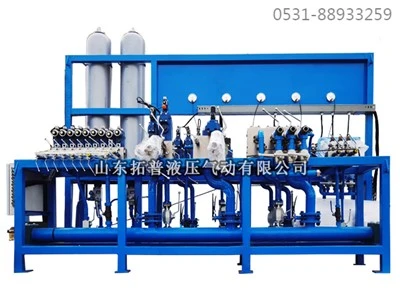
The Basics of Marine Hydraulic Equipment
First off, let’s start with the basics. Hydraulics, in a nutshell, is all about using fluid power to do work. In the marine environment, hydraulic equipment is used in a ton of different applications. From steering systems on big ships to the cranes that load and unload cargo, hydraulic power makes it all happen.
The key component in any hydraulic system is the hydraulic fluid. It’s usually some kind of oil that’s designed to be really stable under different temperatures and pressures. This fluid is what transfers the power from one part of the system to another. Think of it like the blood in your body, carrying energy and making everything work together.
How the System Works
The Pump
The heart of any hydraulic system is the pump. This thing is like a workhorse, taking in the hydraulic fluid and then pushing it out at high pressure. There are different types of pumps, but the most common ones in marine equipment are gear pumps, vane pumps, and piston pumps.
Gear pumps are pretty simple. They have two gears that mesh together, and as they turn, they suck in the fluid at one side and push it out at the other. They’re not the most efficient, but they’re reliable and cheap.
Vane pumps work a bit differently. They have these little vanes that slide in and out of a rotor. As the rotor spins, the vanes create chambers that draw in and then push out the fluid. They’re a bit more efficient than gear pumps but are a bit more complex.
Piston pumps are the heavy hitters. They use pistons to push the fluid. They can generate really high pressures and are very efficient. That’s why you’ll often find them in high – performance marine applications.
The Valves
Once the fluid is under pressure, it needs to go the right place. That’s where the valves come in. There are different types of valves in a hydraulic system, and each has a specific job.
Directional control valves are like traffic cops for the hydraulic fluid. They decide which way the fluid will flow, so it can reach the right part of the equipment, like a cylinder or a motor. You can think of them as switches that turn on and off different hydraulic functions.
Pressure control valves are used to keep the pressure in the system at a safe and stable level. If the pressure gets too high, they’ll release some of the fluid back to the reservoir. This is really important because excessive pressure can damage the equipment.
Flow control valves, as the name suggests, control how much fluid flows through a certain part of the system. This can be used to control the speed of a hydraulic motor or the movement of a cylinder.
The Actuators
The actuators are what turn the hydraulic energy into mechanical work. There are two main types: hydraulic cylinders and hydraulic motors.
Hydraulic cylinders are like big metal tubes with a piston inside. When the pressurized fluid enters one side of the cylinder, it pushes the piston, which in turn moves whatever it’s attached to. For example, on a ship’s steering system, a hydraulic cylinder can be used to turn the rudder.
Hydraulic motors work in a similar way, but instead of moving in a straight line like a cylinder, they rotate. They can be used to power things like winches, propellers in some smaller vessels, and other rotating equipment on a ship.
The Reservoir
Last but not least, we have the reservoir. This is just a big tank that holds the hydraulic fluid. It has a few important jobs. First, it stores the fluid when the system isn’t using it. Second, it helps to cool the fluid by allowing it to spread out and lose heat. And third, it allows any air bubbles in the fluid to rise to the surface and escape. If air gets into the hydraulic system, it can cause all sorts of problems, like reduced efficiency and even damage to the equipment.
Marine – Specific Considerations
One of the big challenges in marine hydraulic equipment is dealing with the harsh marine environment. Saltwater is extremely corrosive, so all the components of the hydraulic system need to be made of materials that can stand up to it. Stainless steel and special coatings are often used to protect the metal parts.
Another issue is the vibration and shock that marine equipment experiences. Waves can cause a lot of movement, and the equipment needs to be able to handle it without breaking down. That’s why the design of marine hydraulic equipment often includes features like shock absorbers and vibration – damping materials.
Also, space is often limited on ships. So, the hydraulic equipment needs to be compact and efficient. We have to find ways to fit all the components into a small area without sacrificing performance.
Why Our Marine Hydraulic Equipment Rocks
As a marine equipment supplier, we take pride in our products. Our hydraulic pumps are designed to be super efficient, whether it’s a simple gear pump or a high – performance piston pump. We use the best materials to ensure that they can handle the tough marine environment.
Our valves are top – notch. They’re precise and reliable, so you can count on them to control the fluid flow and pressure exactly as needed. And our actuators are built to last. They can generate a lot of force, whether it’s linear force from a cylinder or rotational force from a motor.
We also offer great customer service. If you have any questions about the hydraulic equipment, or if you need help with installation or maintenance, our team is here to assist you.
Let’s Connect and Do Business

If you’re in the market for marine hydraulic equipment, I’d love to talk to you. Whether you’re running a big shipping company, a fishing vessel, or a recreational boat, we have the right products for you. Our equipment is designed to help you operate more efficiently and reliably out on the water.
White Appliance Production Line Reach out to us and let’s start a conversation about your specific needs. We can work together to find the perfect hydraulic solutions for your marine operations.
References
- Fluid Power Handbook by Nicholas P. Chironis.
- Marine Engineering Principles and Practice by Robert G. Gill.
- Hydraulic Systems and Circuits Handbook by Craig Smith.
Shandong Huate Tuojiang Intelligent Equipment Co., Ltd.
As one of the leading manufacturers and suppliers of marine equipment in China, we’re featured by quality products and good price. Please rest assured to buy advanced marine equipment for sale here from our factory. Welcome to view our website for more information.
Address: Sino-German Cooperation Industrial Park, Licheng District, Jinan City, Shandong Province
E-mail: sdhttj01@163.com
WebSite: https://www.httjznzb.com/
