Hey there! As a supplier of lead acid battery chargers, I often get asked about voltage regulation. So, I thought I’d take a few minutes to break it down for you and explain its importance. Lead Acid Battery Charger

First off, let’s talk about what voltage regulation is. In simple terms, it’s the ability of a charger to maintain a consistent output voltage, even when the input voltage or load changes. This is super important when charging lead acid batteries because these batteries are sensitive to overcharging and undercharging.
Overcharging can cause the battery to overheat, which leads to a loss of electrolyte and damage to the battery plates. On the other hand, undercharging means the battery won’t reach its full capacity, reducing its lifespan and performance. That’s where voltage regulation comes in. A charger with good voltage regulation ensures that the battery gets just the right amount of charge, every time.
Now, how does voltage regulation work in a lead acid battery charger? Well, most chargers use a combination of electronic components, like transformers, rectifiers, and voltage regulators, to control the output voltage. The transformer steps down the high-voltage input from the power source to a lower, more suitable voltage for charging the battery. The rectifier then converts this alternating current (AC) into direct current (DC), which is what the battery needs.
The voltage regulator is the key component here. It monitors the output voltage and adjusts it as needed to keep it within a specific range. For lead acid batteries, this range usually depends on the battery type and its state of charge. For example, a typical 12-volt flooded lead acid battery needs an initial charge voltage of around 14.4 – 14.8 volts to reach a full charge. Once the battery is almost full, the charger should reduce the voltage to a float voltage, typically around 13.2 – 13.8 volts, to maintain the charge without overcharging.
There are different types of voltage regulation methods used in chargers. One common method is linear regulation. In a linear regulator, a variable resistor is used to adjust the output voltage. It works by dissipating the excess voltage as heat, which can make it less efficient, especially when there’s a large difference between the input and output voltages.
Another method is switching regulation. A switching regulator rapidly switches the input voltage on and off and then filters it to produce a stable output voltage. This method is more efficient than linear regulation because it wastes less energy as heat. Most modern lead acid battery chargers use switching regulation for this reason.
As a supplier, I’ve seen firsthand the impact of good voltage regulation on battery performance. Chargers with precise voltage control can significantly extend the life of lead acid batteries. That’s a huge benefit for our customers, whether they’re using the batteries in cars, boats, solar power systems, or other applications.
When choosing a lead acid battery charger, it’s super important to look for one with good voltage regulation. You want a charger that can adapt to different battery conditions and deliver a consistent charge. I mean, nobody wants to have to replace their batteries every few months because the charger isn’t doing its job right!
Some chargers also come with additional features to enhance voltage regulation. For example, some have temperature compensation. Lead acid batteries charge better at certain temperatures. If the temperature is too high or too low, the ideal charging voltage changes. A charger with temperature compensation can adjust the output voltage based on the battery’s temperature, ensuring an optimal charge in all conditions.
We also offer chargers with multi-stage charging. These chargers have different charging stages, like bulk charge, absorption charge, and float charge. Each stage has its own specific voltage range and time duration, which is designed to charge the battery quickly and safely. During the bulk charge stage, the charger delivers a high current at a relatively low voltage to quickly bring the battery to about 80% charge. Then, in the absorption charge stage, the voltage is increased to finish charging the battery to 100%. Finally, the float charge stage maintains the battery’s charge at a safe level.
I know this all sounds a bit technical, but understanding voltage regulation is really important if you want to get the most out of your lead acid batteries. And that’s where we come in. As a supplier, we’re committed to providing high-quality chargers with excellent voltage regulation. Our chargers are designed and tested to meet the highest standards, so you can trust that your batteries are in good hands.
If you’re in the market for a lead acid battery charger, I’d love to talk to you. Whether you’re a small business owner looking to power your equipment or a DIY enthusiast working on a home project, we have the right charger for you. We can help you choose the charger that best fits your needs and your budget.
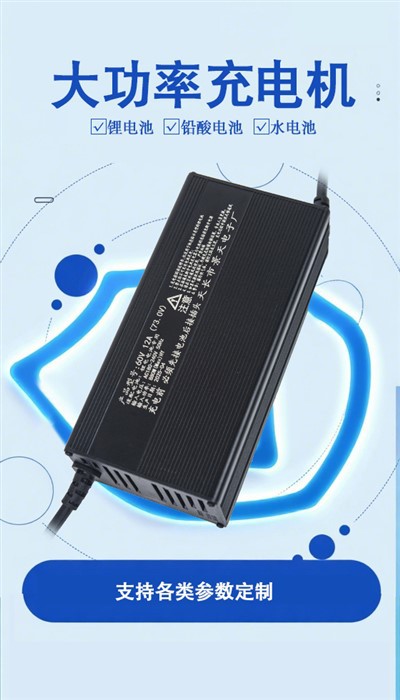
Don’t waste your money on a cheap charger that might damage your batteries. Invest in a charger with proper voltage regulation from a trusted supplier. I’d be more than happy to answer any questions you might have, so feel free to reach out and start a conversation. Let’s work together to keep your lead acid batteries running smoothly and efficiently for years to come.
Battery Charger References
- Battery University – "Charging Lead Acid Batteries"
- IEEE Transactions on Industrial Electronics – papers on power electronics and battery charging technology
- Product manuals of various lead acid battery chargers
Tianchang Hengze Technology Co., Ltd.
With abundant experience, we are one of the most professional lead acid battery charger manufacturers and suppliers in China. Please rest assured to buy bulk lead acid battery charger made in China here from our factory. If you have any enquiry about quotation, please feel free to email us.
Address: No. 8 Sanxing Road, Qinlan Town Industrial Park, Tianchang City, Chuzhou City, Anhui Province, P.R. China
E-mail: 604894957@qq.com
WebSite: https://www.hengzebc.com/
