If you’re in the market for used Nissan engine parts, you might’ve wondered how we make sure every part that leaves our shop actually works the way it should. As a long-time Nissan engine parts supplier, we don’t just grab parts from old engines and ship them out—we’ve got a step-by-step inspection process that’s saved us (and our customers) from way too many headaches. Let me walk you through exactly what that process looks like, no stuffy corporate jargon, just the real stuff we do every single day. Nissan Engine Parts
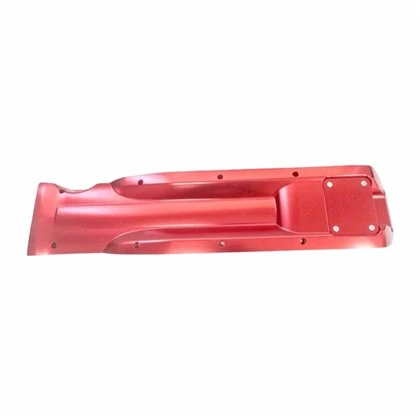
First off, let’s set the scene: we source parts from totaled Nissans—think old Altimas, Sentras, Pathfinders, even Titans that were in accidents or got written off for mechanical issues that cost more than the car was worth. But before we even touch a part, we make sure the core engine is one that’s not a total loss for something unrelated to the engine itself. Like, if a car got rear-ended and the engine is just fine, that’s a great candidate—we don’t touch engines from cars that had a flood or a fire, because water and smoke do way too much hidden damage you can’t see at first glance. That’s the first filter, and it’s non-negotiable for us.
Once a core engine is cleared for extraction, our techs get to pulling it, but even then, we’re taking notes the second it comes in. We plug in our Nissan-specific scan tool right away to pull DTCs (diagnostic trouble codes) from the ECU (engine control unit). That’s a big one—codes like P0300 (random misfires) or P0011 (camshaft position timing over-advanced) tell us there’s a mechanical or electrical issue we need to fix, not just a fluke. We never trust a car that runs a code, no matter how “fine” it seemed to the insurance adjuster. That scan tool is our first line of defense, and it’s saved us from selling parts that were on their last legs.
Next up, when the engine is on our workbench, we do a visual inspection. No fancy machines here, just a good pair of eyes and a light. We check for leaks—oil, coolant, fuel, anything that would make a part useless fast. We look at the block for cracks, especially around the cylinders or freeze plugs. Those cracks might be tiny, but they can blow up into a huge problem once the engine is running. We also check the heads for warping or damage to the valve seats—if the head’s warped, the valves won’t seal right, and you’re stuck with compression issues that make the engine run bad. For parts like cylinder heads or intake manifolds, we run a quick visual for rust, especially if the engine sat outside for a while. A little surface rust might be fine, but deep pitting means you’re going to lose compression or have fuel leaks later.
After the visual, we move on to more hands-on checks. We start with the compression test—super straightforward, and it tells us way more than a lot of people think. We disconnect the fuel system, crank the engine over a few times, and measure how much pressure is in each cylinder. For most Nissan engines, we’re looking for at least 125 PSI per cylinder, and no more than a 10% difference between the highest and lowest. If one cylinder is at 80 PSI and another at 140, that’s a problem—either a valve is stuck, a piston ring is worn, or there’s a head gasket leak. We also do a leak-down test after the compression test, which is way more sensitive. It pumps compressed air into each cylinder and measures how much leaks out. If more than 15% leaks out, that’s a sign of internal damage we need to address, not just a normal engine wear thing.
We don’t stop at the engine block, either. Every individual part we’re selling gets its own check, not just the whole assembly. Take a crankshaft, for example—we run a magnaflux test. That’s a process where we use a magnetic field to find tiny cracks in the crankshaft that you can’t see with the naked eye. A cracked crankshaft will seize up an engine in a matter of minutes, so that test is non-negotiable. For camshafts, we measure the lobe height with a micrometer. If the lobe is worn down too much, the valves won’t open or close properly, leading to power loss or misfires. We also check the bearings for pitting or scuffs—if the bearings are bad, that means the engine was low on oil at some point, which is a red flag for internal wear.
Electrical parts, like alternators, starters, fuel injectors, and ECUs, get their own dedicated tests because they’re finicky. Alternators get bench-tested to make sure they’re putting out the right voltage (13.5-14.5 volts, for the record) at idle and under load. Starters get spun up on a test stand to make sure they engage properly and don’t draw too much current—if a starter draws too much, it’ll kill your battery or blow fuses right after installation. Fuel injectors are flow-tested; we make sure each injector is spraying the right amount of fuel in the correct pattern, not dripping or spraying unevenly. For ECUs, we plug them into a test rig that syncs with our scan tool to make sure all sensors and actuators are communicating correctly—no loose connections or fried circuits here.
Once all the individual parts are tested, we put them back together (if they were disassembled) and do a final functional test on the full engine assembly. We mount it to a test stand, hook up coolant, fuel, and electrical connections, and fire it up. We let it run at idle for a few minutes, then rev it up gently to 2,500 RPM, and check for leaks, noise, or smoke. We’re listening for any knocking, ticking, or grinding noises—those are signs of bad bearings or worn valves that we missed earlier. Any blue smoke means burning oil, white smoke means a coolant leak, and black smoke means too much fuel—all things we fix before the engine leaves our shop. We run it for at least 15 minutes total, just to make sure it doesn’t die after 5 minutes of running.
Now, I know what you’re thinking: “All that sounds great, but what about parts that aren’t full engines?” Like, if someone just needs a transmission, or a valve cover, or a head gasket? Every part gets the same level of scrutiny, just tailored to the part. A used valve cover—we check for cracks that would cause oil leaks, and make sure the threads for the bolts aren’t stripped. A transmission—we do a pressure test to make sure the solenoids are shifting correctly, and check for metal shavings in the fluid (that’s a sign of internal gear wear). Even small stuff like intake manifolds—we check for vacuum leaks with a smoke machine. We pump smoke into the manifold, and if it leaks out, we fix the crack or replace the gasket before shipping.

I’ll be honest, this process takes time. It’s not just pulling a part and shipping it for $50. Some engines take a full week to inspect and test, because we don’t cut corners. But here’s the thing: our customers come back to us because they know they’re getting a part that works, not a lemon. We’ve had people buy an engine from us and put it in a car that’s still running 5 years later, and that’s way better than getting a cheap part that dies in 6 months.
TOYOTA Engine Parts If you’re looking for reliable used Nissan engine parts, we’ve got you covered. We stock parts for nearly every Nissan model out there—from the old 240SX to the latest Rogue. We also work with mechanics and do-it-yourselfers alike, so whether you’re replacing an engine in your own Sentra or running a shop that needs a steady supply of parts, we can help. Feel free to reach out to us to talk through your needs, ask any questions about a specific part, or get a quote. We’re here to make sure you get the right part, at a fair price, with the confidence that it’s been properly inspected and tested.
References
- Nissan Service Manual: Used Engine Inspection Procedures
- Automotive Parts Rebuilders Association (APRA) Guidelines for Used Engine Parts
- SAE International: Non-Destructive Testing Standards for Engine Components
RCH Precision Machinery Co., Ltd.
With abundant experience, we are one of the most professional nissan engine parts manufacturers and suppliers in China. We warmly welcome you to buy high quality nissan engine parts at competitive price from our factory. If you have any enquiry about cooperation, please feel free to email us.
Address: No.71 Zhennan 3 road Tong’an Area Xiamen, Fujian, China
E-mail: mike@rchxm.com
WebSite: https://www.rchxm.com/
