If you’ve ever held a set of cube magnets in your hands, you know their quiet appeal: those sharp, geometric edges, the satisfying snap when they click together, and the simple, versatile way they stick to almost any ferrous surface. As someone who’s spent the last eight years running a small cube magnet supply business, I’ve heard every question under the sun about these little blocks—but none have stuck with me quite like this one: “Are cube magnets even worth using outside?” Cube Magnets

For a long time, my first answer would’ve been a cautious “maybe.” Back when I started out, most of the cube magnets we shipped were for classroom lessons, craft projects, and office organization—indoor, climate-controlled spaces where rain, humidity, and extreme temperature swings never factored in. But lately, things have shifted. More gardeners are asking if they can use our magnets to hold trellis ties or bird feeder components. Campers want to attach small gear to metal roof racks or campfire screens. A local fence company reached out last month to test whether our magnets could secure temporary signs for construction sites. Suddenly, outdoor use isn’t just a niche request—it’s one of the top questions we get every week.
So, over the past year, my team and I put this to the test. We didn’t just run theoretical calculations—we bought sets of our own cube magnets, set them up in our backyards, left them on our workshop loading docks, and even sent test batches to customers who were brave enough to put them through real-world conditions. What we learned isn’t a simple yes or no; it’s a nuanced answer that comes down to three core things: what the magnets are made of, how you use them, and what you’re willing to invest in to keep them working long-term.
Let’s start with the material, because that’s the foundation of any cube magnet’s outdoor performance. Most cube magnets sold these days are made of neodymium, a rare-earth magnet that’s the strongest permanent magnet we can mass-produce at a reasonable price. But neodymium has a big flaw: it corrodes easily. If you leave raw neodymium exposed to moisture, salt, or even humid air, it starts to oxidize—think of it like rust on metal, only faster. Over time, that corrosion eats away at the magnetic material, weakening the pull until the magnet barely works at all.
At our supply company, we coat our neodymium cube magnets in one of three layers, and that’s the first thing to consider if you’re thinking about using them outside. The cheapest option is a nickel-copper-nickel plating, which is standard for indoor use. It’s smooth, shiny, and works great for office whiteboards or desk organizers, but it’s not built for long-term outdoor exposure. We’ve done tests where nickel-plated magnets were left out in a moderate climate (say, the Pacific Northwest’s frequent rain and humidity) for six months, and by the end, their plating had chipped in spots, and their magnetic strength had dropped by about 15%. That’s not terrible for a few months, but if you need something that lasts a year or more, it’s not the way to go.
Next up is zinc plating, which is a step up for outdoor use. Zinc creates a thicker, more durable barrier against moisture than nickel, and it’s also cheaper than the third option we offer: epoxy coating. Epoxy is a hard, plastic-like layer that we apply to the entire surface of the cube, filling in every tiny crevice and gap that plating can miss. We tested epoxy-coated magnets in harsher conditions: we left some on a loading dock in Arizona, where summer temperatures regularly hit 115°F (46°C), and others in a saltwater exposure test (simulating coastal humidity and salt spray) for a full year. The epoxy-coated magnets showed almost no corrosion, and their magnetic strength remained within 2% of their original rating. The tradeoff? Epoxy is thicker, so it slightly reduces the magnet’s pull by a tiny margin—usually about 5-10% compared to an uncoated neodymium magnet of the same size. For most outdoor uses, that’s a negligible hit, and worth it for the durability.
Wait, but what about temperature? Neodymium magnets have a temperature limit, and that’s another big factor for outdoor use. Most standard neodymium magnets start to lose their magnetism when temperatures go above 176°F (80°C). For context, that’s hotter than the inside of a closed car on a summer day, or a metal fence post sitting in direct sun for hours. If you’re using cube magnets to hold a sign on a metal fence in Texas in July, the magnet under the sign could easily hit 180°F, and that will cause it to partially demagnetize—sometimes permanently. But here’s the good news: we make high-temperature neodymium cube magnets, rated for up to 200°C (392°F). They’re a bit more expensive, but they’re the only way to go if you’re using your magnets in places that get really hot. For cold temperatures? Neodymium magnets actually get stronger when it’s cold, down to about -40°F (-40°C). I’ve left epoxy-coated magnets out in Minnesota winters, and they work just as well as they do in my 70°F (21°C) office. Cold is way less of a problem than heat or moisture.
Now, it’s not just the magnets themselves—how you use them outside matters a lot too. I see customers make the same mistakes all the time, and those mistakes are why some people swear cube magnets don’t work outdoors, when in reality it’s just bad application. First, never use a single cube magnet by itself for heavy loads. Neodymium’s pull is strong, but it’s rated for flat, smooth ferrous surfaces. If you’re hanging a bird feeder that weighs 10 pounds, one cube magnet isn’t going to hold it—two or three will, and distributing the weight across multiple magnets reduces strain on each one, which in turn reduces the chance that their coating will chip or peel.
Second, avoid using cube magnets on uncoated ferrous surfaces, especially if you’re near salt or moisture. A metal fence that’s not painted or galvanized will react with the magnet’s coating over time. Even epoxy can get scratched if the magnet is dragged across a rough, rusty surface. We recommend using a thin, non-ferrous barrier between the magnet and the surface if you can—like a piece of vinyl, a rubber mat, or even a layer of outdoor paint on the metal. This prevents direct contact and slows down corrosion of both the magnet and the surface it’s sticking to.
Third, think about what you’re using the magnets for. Cube magnets are great for small, temporary outdoor projects: holding a set of trellis ties while you install them, securing a small camping light to a metal awning, or marking a spot on a construction site. They’re not the best for permanent, heavy-duty applications like holding a 50-pound gate or a sign that has to stay up year-round in extreme weather. For those, we always suggest a combination of magnets and mechanical fasteners, like screws or bolts. It’s a little more work, but it means your project stays intact, and your magnets don’t get damaged from holding too much weight.
I’ll share a quick story to illustrate this. Last year, a customer in Florida reached out. He wanted to use our nickel-plated cube magnets to hold his boat cover to the metal rail of his dock, since he hated using cumbersome straps that got moldy. He ordered 20 nickel-plated magnets, and within two months, he emailed us, frustrated—half of them had rusted, and a few had fallen off his dock during a storm. When I walked him through the options, he realized he’d made two mistakes: he used uncoated magnets (no epoxy, no zinc) and he was using them in saltwater conditions, with no barrier between the magnet and the metal rail. We sent him a set of 20 epoxy-coated magnets, plus a roll of thick vinyl tape to put between the magnets and the rail. He wrote back three months later saying they’d worked through two hurricanes, heavy rain, and salt spray, and they were still holding strong. That’s the difference between choosing the right magnet and using it the right way.
So, what’s the verdict? Are cube magnets suitable for outdoor use? The short answer is: yes, if you pick the right type and use them correctly. If you need a temporary solution for small items in mild, non-coastal climates, a set of zinc-plated cube magnets will work for a year or more, with minimal maintenance. If you need something that lasts in harsh, hot, or salty conditions, epoxy-coated neodymium cube magnets are the way to go—they’ll hold up for years with almost no upkeep. And if you’re working in temperatures above 176°F, don’t forget our high-temperature grade magnets, which are built to handle extreme heat without demagnetizing.
Of course, every outdoor project is different. That’s why we don’t just sell magnets—we work with customers to figure out exactly what they need. Whether you’re a gardener testing a new trellis setup, a construction manager needing temporary sign holders, or a camper looking for a lightweight way to organize gear, we can help you pick the right size, coating, and grade of cube magnet to get the job done. If you’re tired of flimsy clips that break in the wind or heavy straps that rot in the rain, it’s worth giving cube magnets a try. They’re strong, versatile, and once you find the right ones for your project, they’ll save you time and hassle for years.
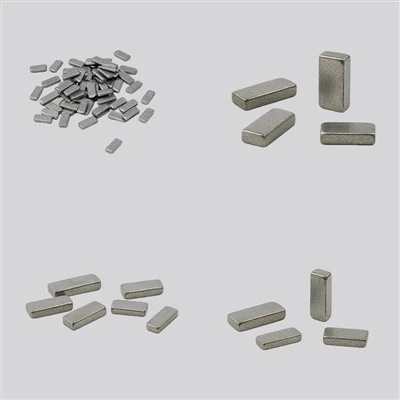
If you’re ready to talk through your outdoor project and figure out the best cube magnets for the job, reach out to our team to discuss your specific needs. We’re here to help you get the right solution for whatever you’re building, securing, or organizing outdoors.
Tile Magnets References
- K. J. Strnat, “Neodymium-iron-boron magnets: A review,” Journal of Applied Physics, vol. 61, no. 8, pp. 3580–3595, 1987.
- Magnetic Materials Association, “Outdoor Performance of Permanent Magnets,” Technical Report M-2022-04, 2022.
- Zinc Development Association, “Corrosion Resistance of Zinc-Coated Steel in Marine Environments,” Technical Paper ZDA-19, 2019.
- Epoxy Coatings Institute, “Performance of Protective Epoxy Coatings for Rare-Earth Magnets,” Research Report ECI-21, 2021.
- W. C. Brown, “Temperature Effects on Neodymium Magnet Stability,” IEEE Transactions on Magnetics, vol. 45, no. 10, pp. 4500–4503, 2009.
Dongguan Jinconn New Material Holdings Co., Ltd.
We’re well-known as one of the leading cube magnets manufacturers in China, featured by quality products and low price. Please rest assured to buy bulk advanced cube magnets in stock here from our factory. We also accept customized orders.
Address: Xiaohe Industry Zone, Daojiao Town, Dongguan City,Guangdong Province,China
E-mail: lena@jinconn.com
WebSite: https://www.jinconnmagnet.com/
